What Is a Magalog: How It Works and When to Use One
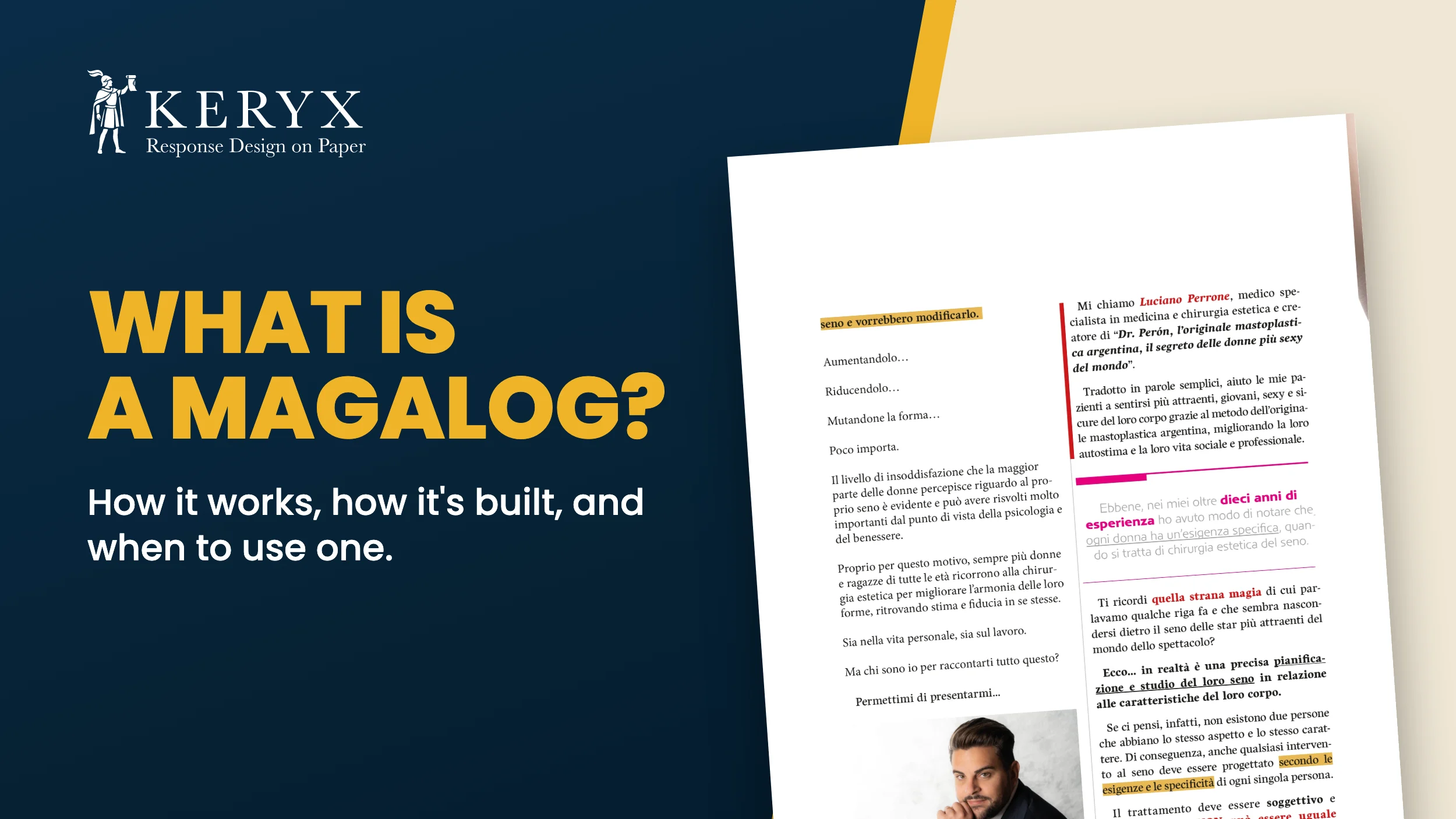
A magalog is one of the most powerful tools in print direct response. And yet most people couldn't tell you what one is, and the few who try reduce it to "a magazine with ads inside." That's not it.
This is a full guide to the magalog. What it actually is, why it converts better than a brochure, how it's built on the inside, and when it makes sense to print one. If you sell services, consulting, training, or high-value products to a profiled list, a magalog is probably the format you need. But not always. We'll say so plainly further down.
What a magalog is
A magalog is an advertising magazine. A publication that presents and reads like a magazine, but is built start to finish to sell.
The name is a mash-up of two words: magazine and catalog. From the outside it looks like a magazine or an industry guide. Inside it's a long advertorial: sales copy organized as editorial content, with articles, deep dives, sidebars, testimonials, and images. The reader flips through it the way they'd read a magazine, and in doing so walks a complete sales path without noticing.
The difference with a flyer or a brochure is the mental frame the reader steps into. In front of a flyer the reader's guard goes up: they know it's an ad, so they scan it in two seconds and toss it. In front of a magalog the guard comes down: it looks like content worth reading, so they read it. And while they read, they get sold.
The magalog was born in American direct marketing, where mail-order publishers have used it for decades to sell subscriptions, books, supplements, and financial services to profiled lists. It's a format tested across millions of mailings, not a trend.
In short: a magalog is sales copy dressed as a magazine. Looks like content, is advertising, and gets read for exactly that reason.
Why a magalog works
It works for one precise reason: it gets past the reader's advertising defenses.
We all run an automatic filter against advertising. We've trained it for years. The moment something "smells like selling," rejection kicks in and we stop reading. A flyer, an ad page, a corporate brochure trip that filter in seconds. A magalog doesn't, because it doesn't present as advertising. It presents as a magazine, and a magazine gets read.
That's the heart of the mechanism. The magalog doesn't shout "buy me." It informs, tells a story, gives context, brings proof. It builds the sale page after page, the way a good salesperson builds an argument in person. By the time the call to action arrives, the reader has already been convinced by what they read, not ambushed by an offer fired in their face.
There's a second, more concrete reason: paper in the mailbox works where email no longer lands. Inboxes are saturated, spam filters aggressive, open rates sliding. A physical piece in the mailbox gets picked up. For a sense of scale, industry data puts print direct mail response around 4.9%, against roughly 1.3% for email (Data & Marketing Association). It's not paper versus digital in the abstract. It's the reason that, for certain high-value offers, it pays to mail something physical and well made instead of one more email.
The magalog holds both together: the physical format that gets into the house and the editorial format that lowers the guard. It gets read by the people who normally bin advertising.
How a magalog is built: the anatomy
A magalog isn't a stack of pretty pages. It's a structure. Every element has a selling function, and the order things appear in is deliberate. These are the typical components.
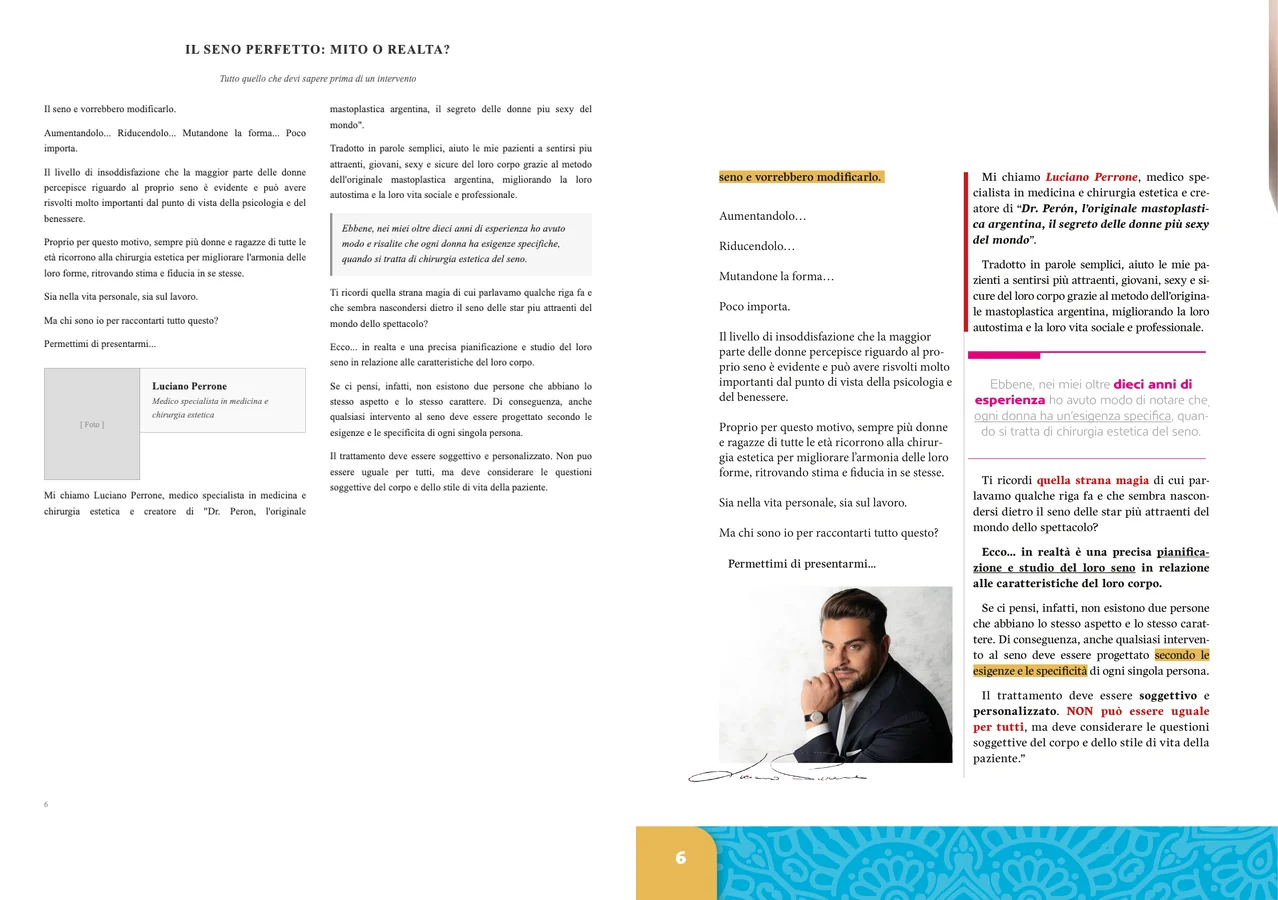
The cover is a hook, not a logo. The first page isn't there to show the company name. It's there to give the reader a reason to open. A headline that promises something concrete, an image that pulls curiosity, a clear value proposition. If the cover doesn't hook, nothing inside gets read.
The sections walk a path. The magalog is split into articles and sections like a magazine, but the order isn't random: it carries the reader from problem to solution, from doubt to proof, from proof to decision. Each section takes the baton from the last.
The sidebars break up and reinforce. They're the boxes alongside the text. They do two jobs: give breathing room to the fast skimmer and reinforce the key messages for the reader who doesn't read every line. Whoever jumps box to box still has to land the main selling points.
The testimonials are proof, placed where they're needed. Not piled at the back, but dropped in at the points where the reader starts to doubt. The right testimonial in the right spot dismantles an objection at the exact moment it forms.
The proof and the numbers build credibility. Data, results, guarantees, verifiable detail. They raise the perceived probability that the promise is true. Without proof, the magalog stays a story. With proof, it becomes an argument.
The CTAs are repeated, not single. The call to action doesn't sit on the last page only. It repeats across the piece, because the reader decides at different moments and the ask has to be there when they're ready. A CTA buried at the back is a lost conversion.
Above all of this sits the copy, and the copy runs the show. The magalog's design doesn't decorate the text: it serves it. It engineers the readership path, gives every element its right visual weight, makes sure the headline gets read first and the CTA jumps out. Copy that sells, laid out like a bank pamphlet, stops selling. A magalog's design exists to prevent exactly that. We go deeper on the technical side of the readership path on our page about what direct response design means.
Magalog, brochure, and catalog: what's the difference
The three formats get confused all the time, but they're after different things. The difference isn't page count: it's what they're trying to achieve.
The brochure presents. Shows who you are, what you do, your services. It's an extended business card. It talks about the company, runs in an institutional tone, and rarely drives a measurable action. It exists to let people know you're there, not to make them buy now.
The catalog lists. It's an organized list of products with descriptions, codes, and prices. It's for the person who's already decided to buy from you and needs to pick what. It doesn't convince: it assists a decision already made.
The magalog convinces and drives action. It doesn't present the company and it doesn't list products. It builds a selling argument dressed as content, with one goal: get the reader to take a specific, trackable action. It's the only one of the three designed and measured for conversion.
In short: the brochure says who you are, the catalog says what you sell, the magalog convinces you to buy. They're not richer or leaner versions of the same thing. They're tools for different jobs.
When a magalog makes sense (and when it doesn't)
The magalog isn't the right format for everything. Printing one costs money, and in some cases it's money thrown away. Better to say so first.
It makes sense when:
- You sell something high-value: services, consulting, training, premium products. The margin has to justify the cost of a crafted piece and the postage.
- You have a profiled list to mail. A magalog earns on someone with at least a little interest or a profile that fits the offer, not sprayed at random into mailboxes.
- The offer needs explaining. If convincing takes argument, proof, and context, a long format works where a flyer can't.
- You operate in a niche where competitors use only institutional brochures. There the magalog becomes an edge, because you're talking to a reader while everyone else just introduces themselves.
It doesn't make sense when:
- You sell a low-price, low-margin product. The math doesn't work.
- You don't have a list and no way to profile who receives it. A magalog mailed cold and undifferentiated rarely pays back.
- The offer explains itself in one line. If a postcard or a single page does the job, a magalog is overkill.
- You just want to "get known" with no measurable action in mind. That's a brochure's job, not a magalog's.
If you land in the first list, a magalog is probably the right tool. If you land in the second, there's almost always a direct response format that fits better and costs less, like a sales letter or a postcard. Honestly, better to know before you print.
How much a magalog costs
Short answer: it tracks response, not page count. A magalog isn't sold by the pound.
The price moves with the complexity of the structure, the number of sections, the work of engineering the readership path, and what's included (design only, or copy and print too). Rather than repeat numbers out of context, we gave the price its own piece: how much a magalog costs and what drives it.
The one thing to keep in mind: the real cost of a magalog isn't what you spend to make it. It's every conversion you lose when the reader quits on page three. A magalog done right on the right offer pays for itself with a few extra conversions over any old layout.
How Keryx works on magalogs
We do one thing: direct response design. We don't sell courses, we don't do brand identity, we won't explain direct marketing to you if you already know it better than we do. We design print pieces built to convert.
On the magalog our principle is simple: the copy is sacred. If you have a copywriter or you write the text yourself, we don't touch a word without your sign-off. Our job isn't to rewrite your copy, it's to make sure it gets read start to finish. We engineer the readership path, give every element its right visual weight, put the testimonials and CTAs where they pull. You bring the words, we make them convert.
A concrete example of how direct response design moves the numbers is in the case of a brochure that got half its readers to scan the QR code.
If you already have the copy for a magalog and you're looking for someone to lay it out without killing it, here's the pricing, with what's included and the rates. If you'd rather first see where a bad design is costing you conversions, we collected the 13 most common mistakes in a free guide. To talk through a specific project, get in touch.
Frequently asked questions about magalogs
What is a magalog in plain terms?
A magalog is an advertising magazine: a publication that presents and reads like a magazine but is built to sell. The name fuses magazine and catalog. It works because it doesn't look like advertising, so the reader reads it instead of tossing it.
What's the difference between a magalog and a brochure?
The brochure presents the company and its services in an institutional tone: it's there to get you known. The magalog builds a selling argument dressed as editorial content, with the goal of driving the reader to a measurable action. The brochure says who you are, the magalog convinces you to buy.
When is a magalog worth using?
When you sell something high-value (services, consulting, training, premium products), you have a profiled list to mail it to, and the offer needs explaining with argument and proof. It's not worth it for low-price products, without a list, or for offers that explain themselves in one line.
How much does it cost to make a magalog?
The price depends on the complexity of the structure and what's included (design, copy, print), not on page count alone. We broke down how the price forms and what drives it in the dedicated piece on magalog cost.
Leggi questo articolo in italiano: versione italiana →